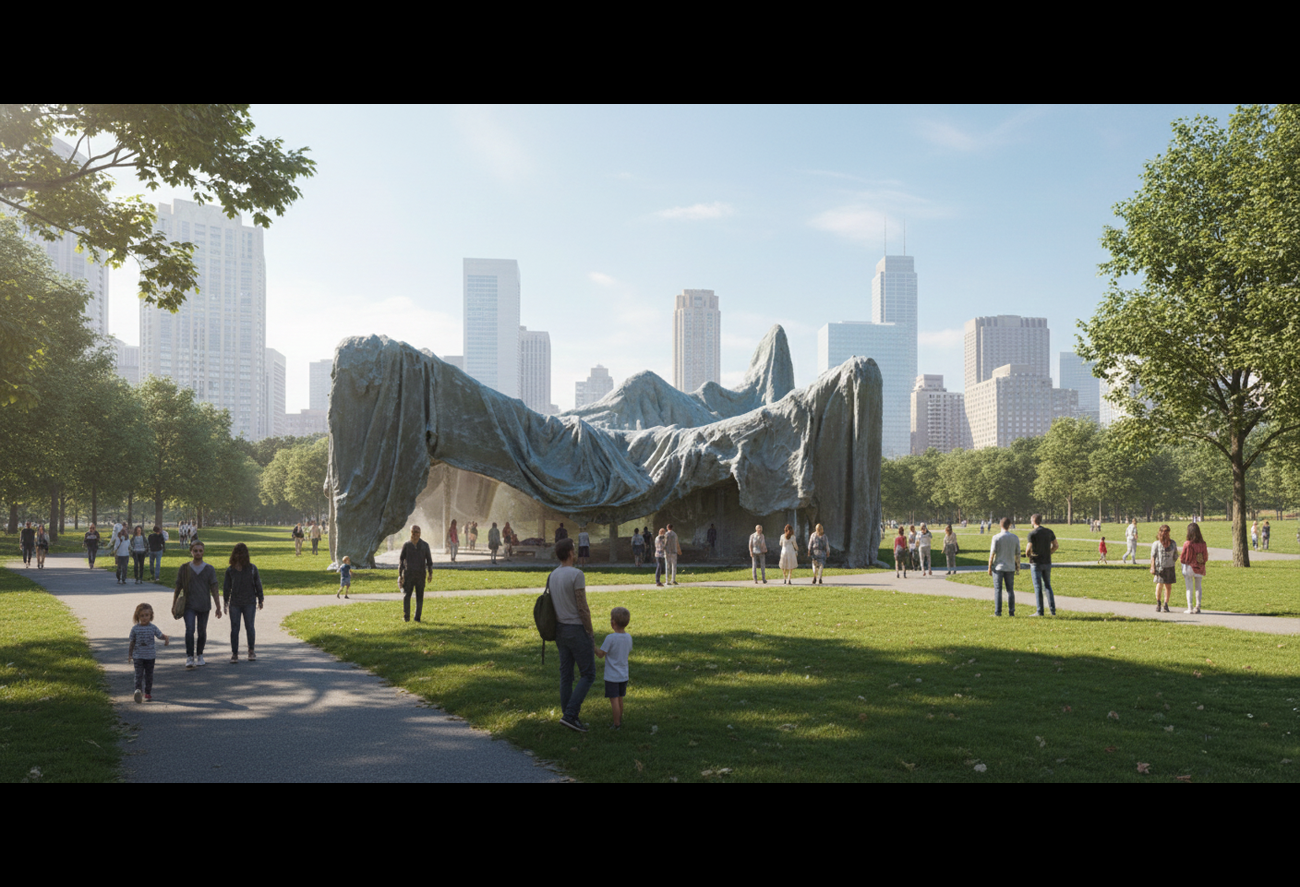
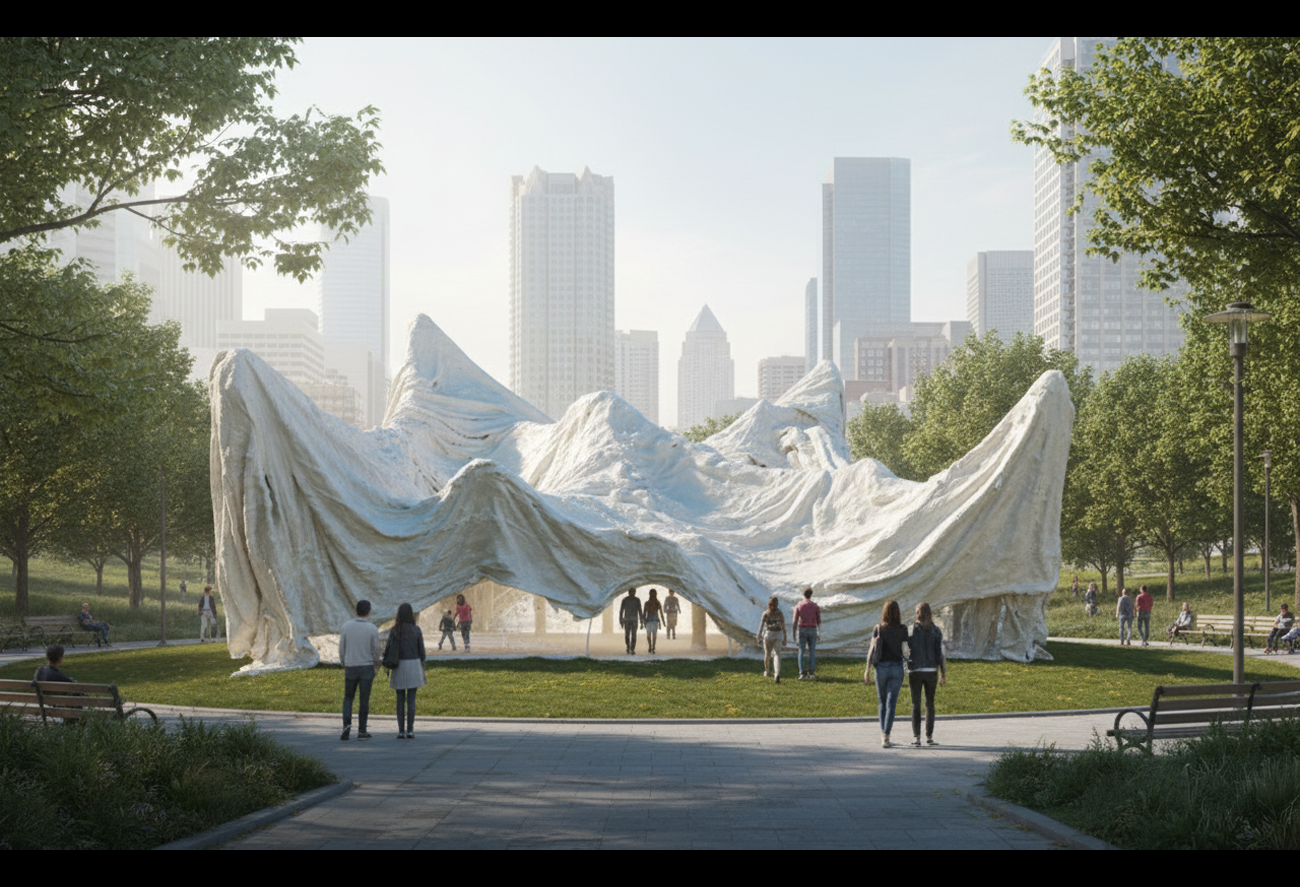
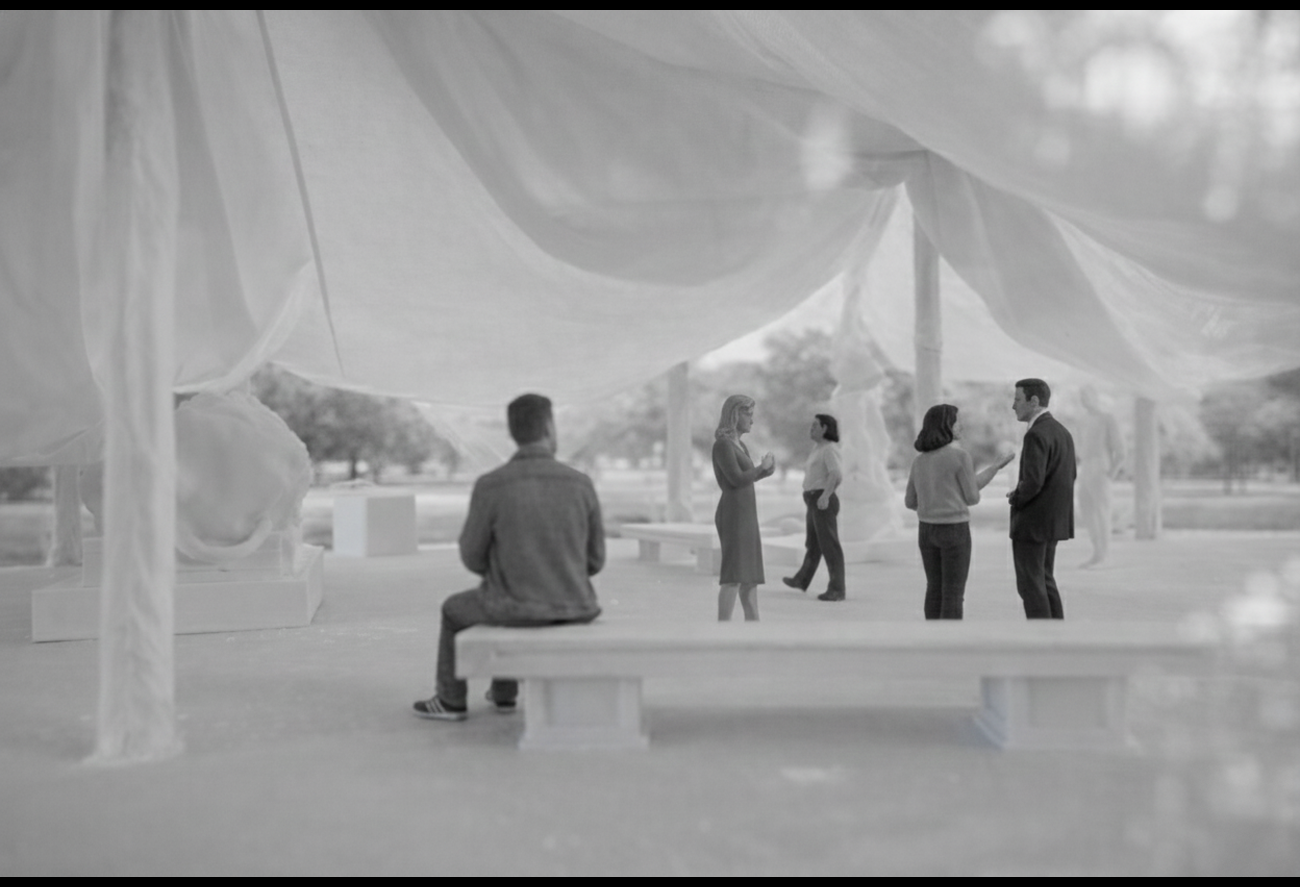
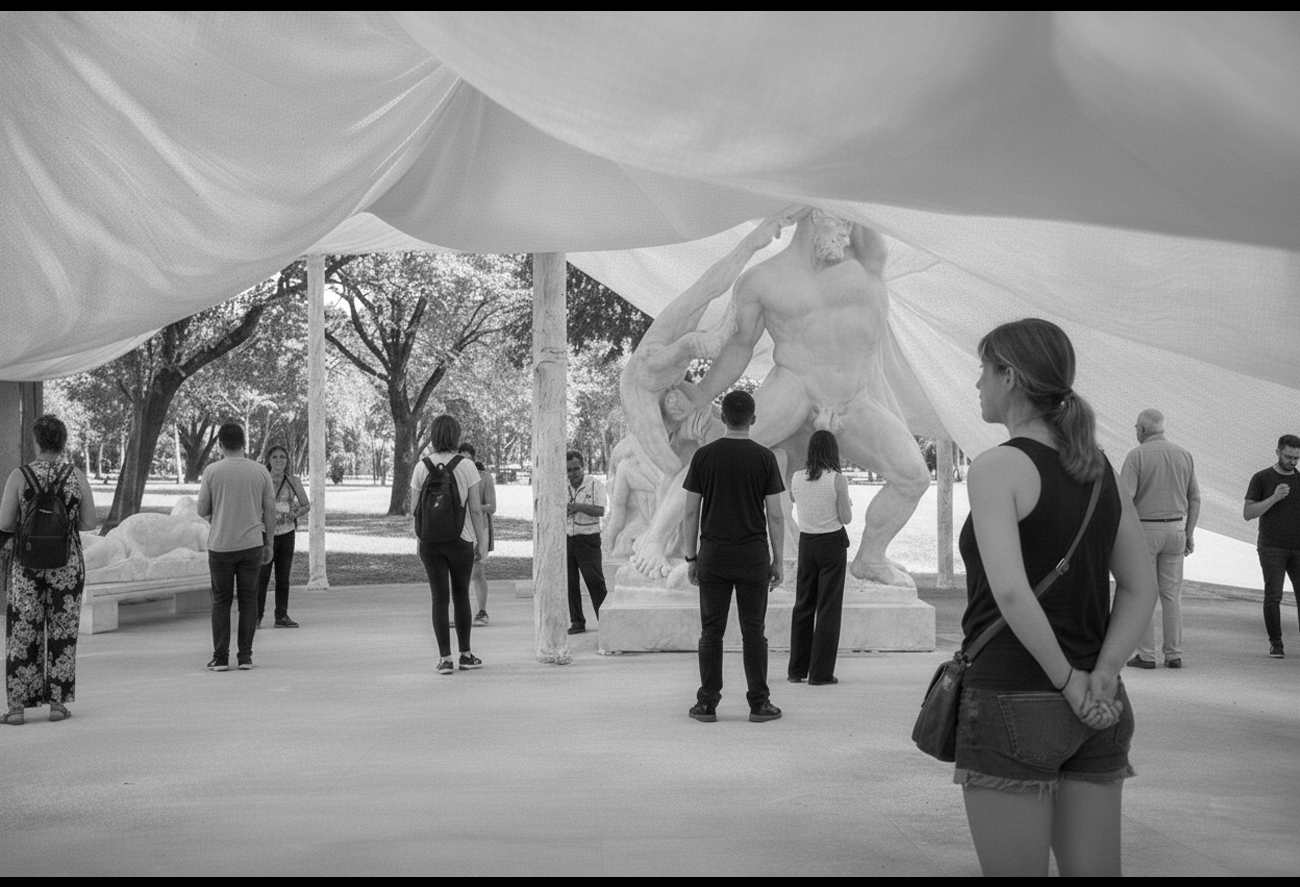
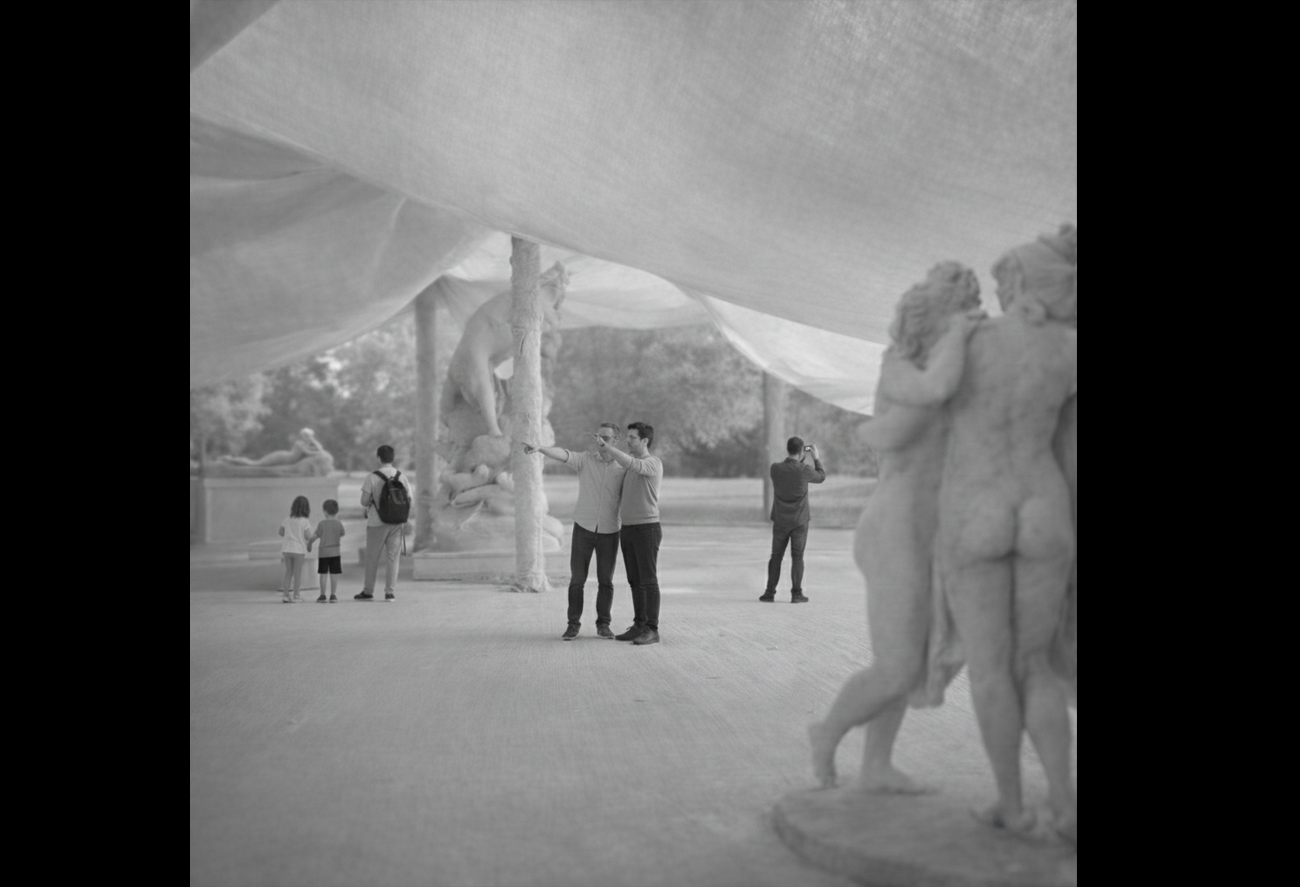
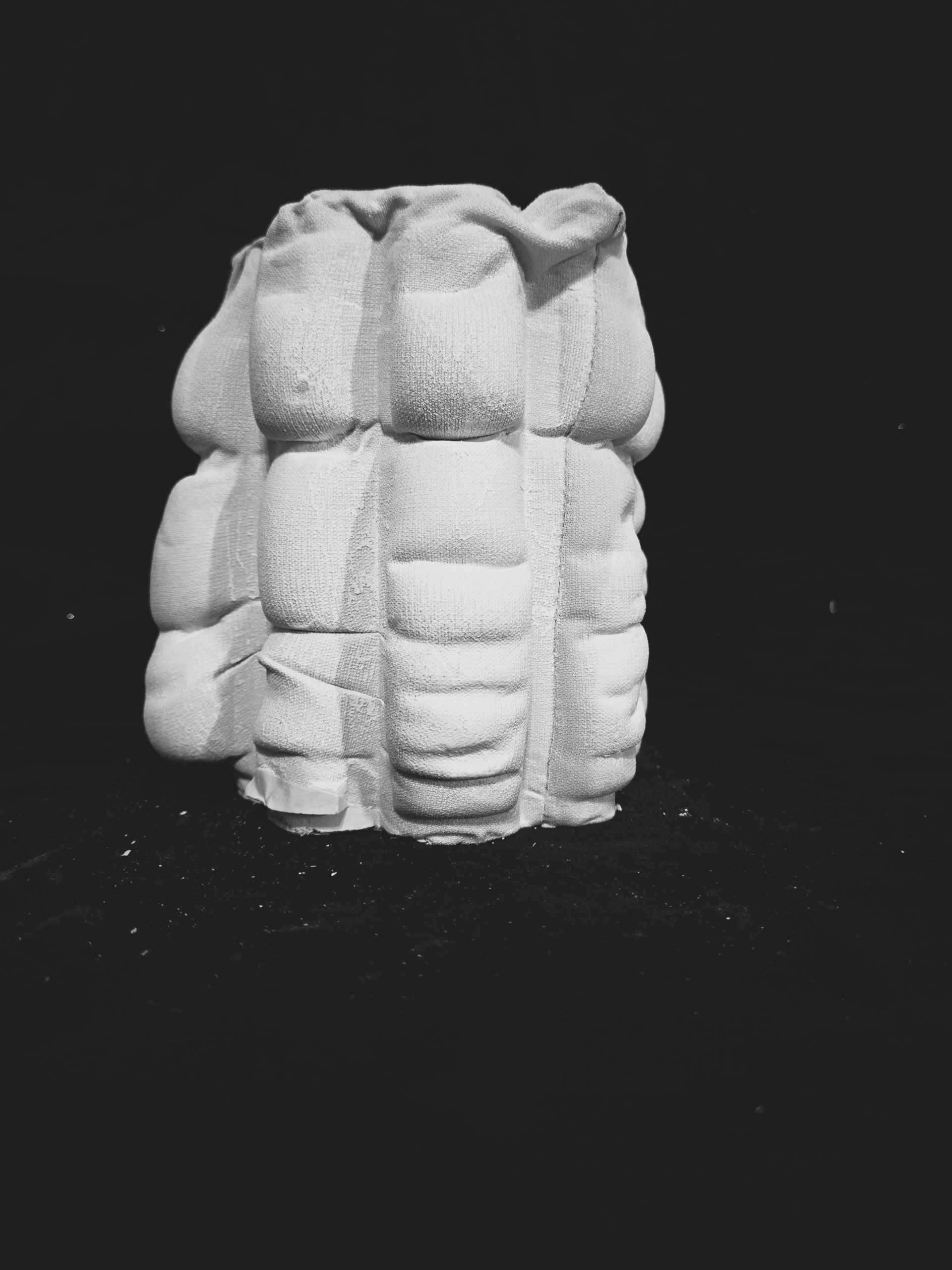
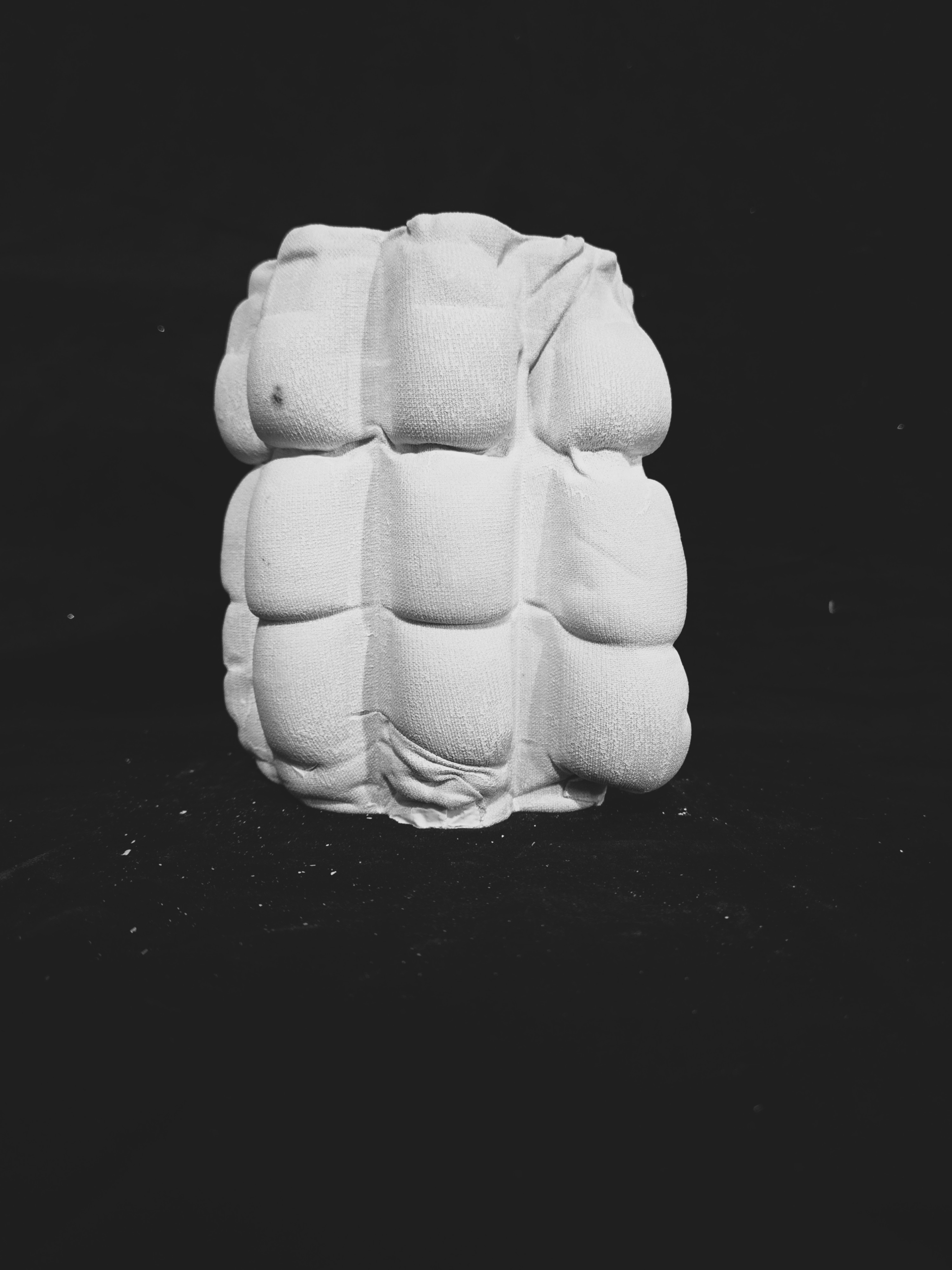
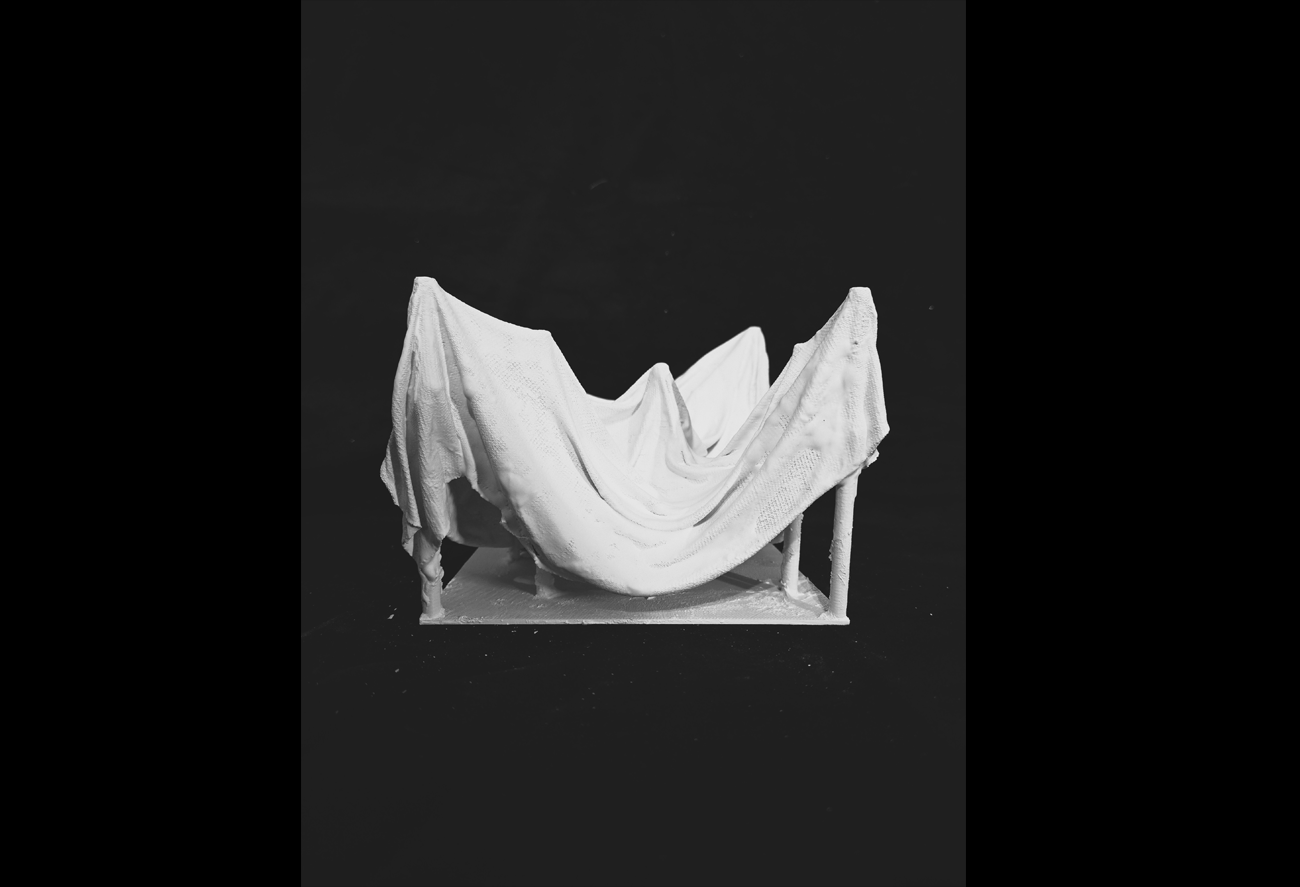
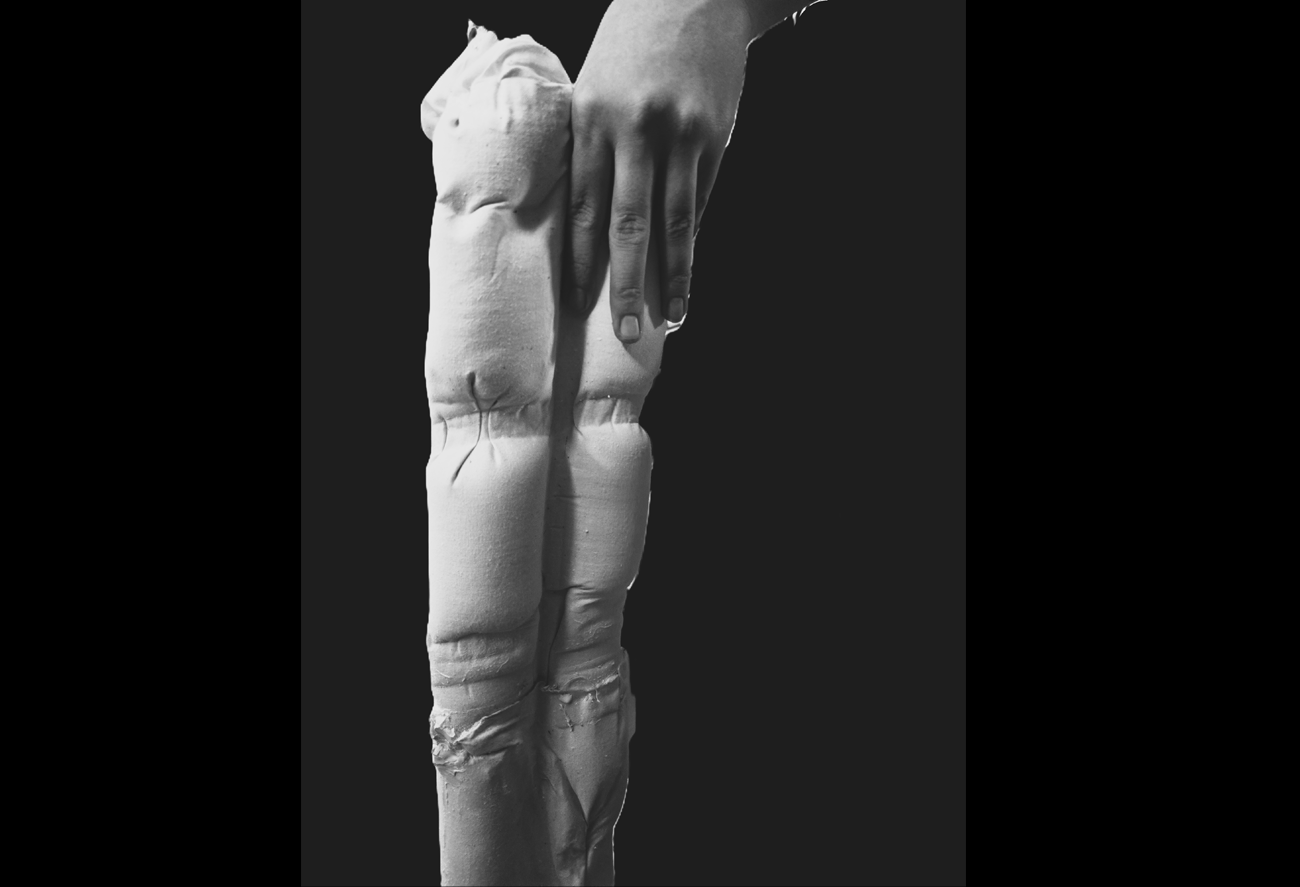
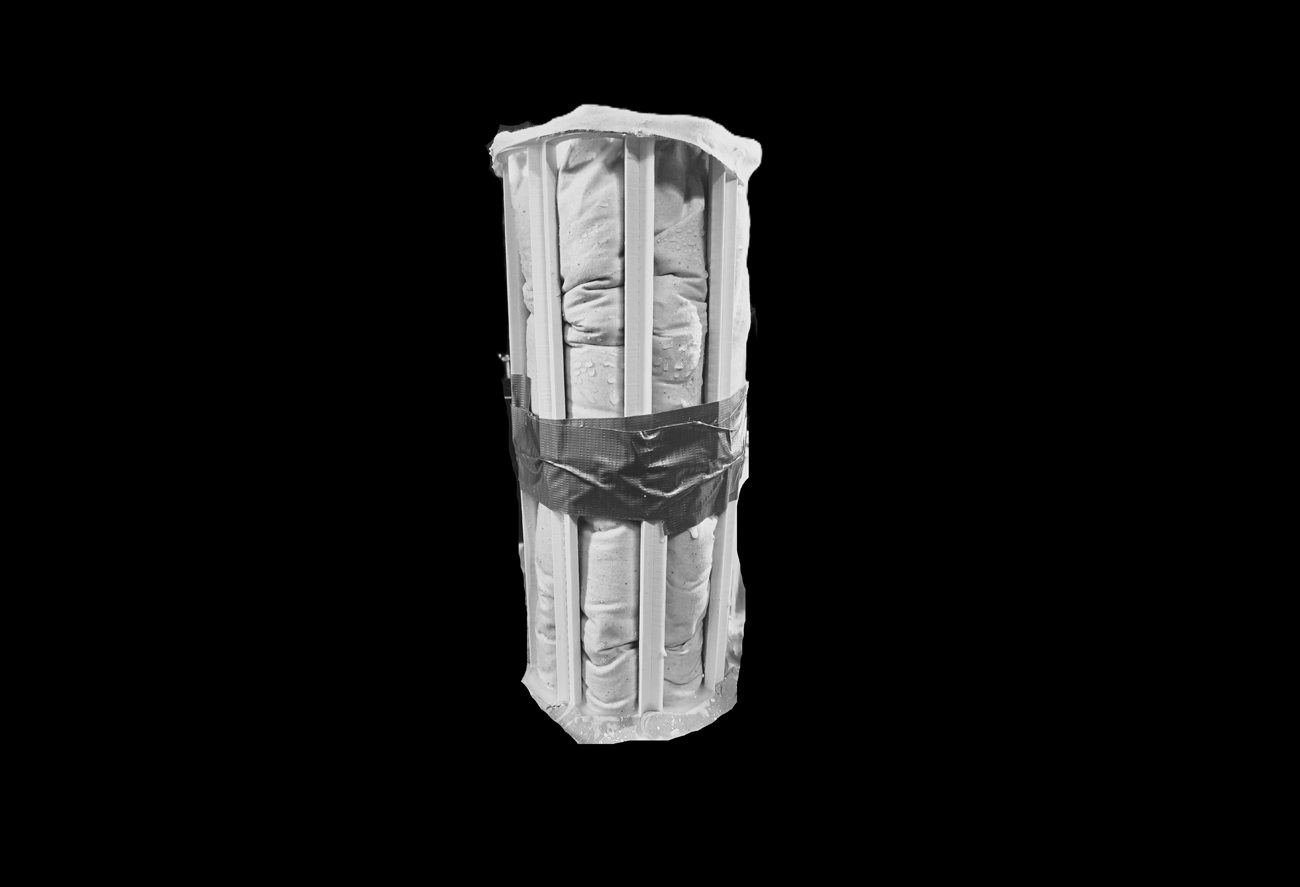
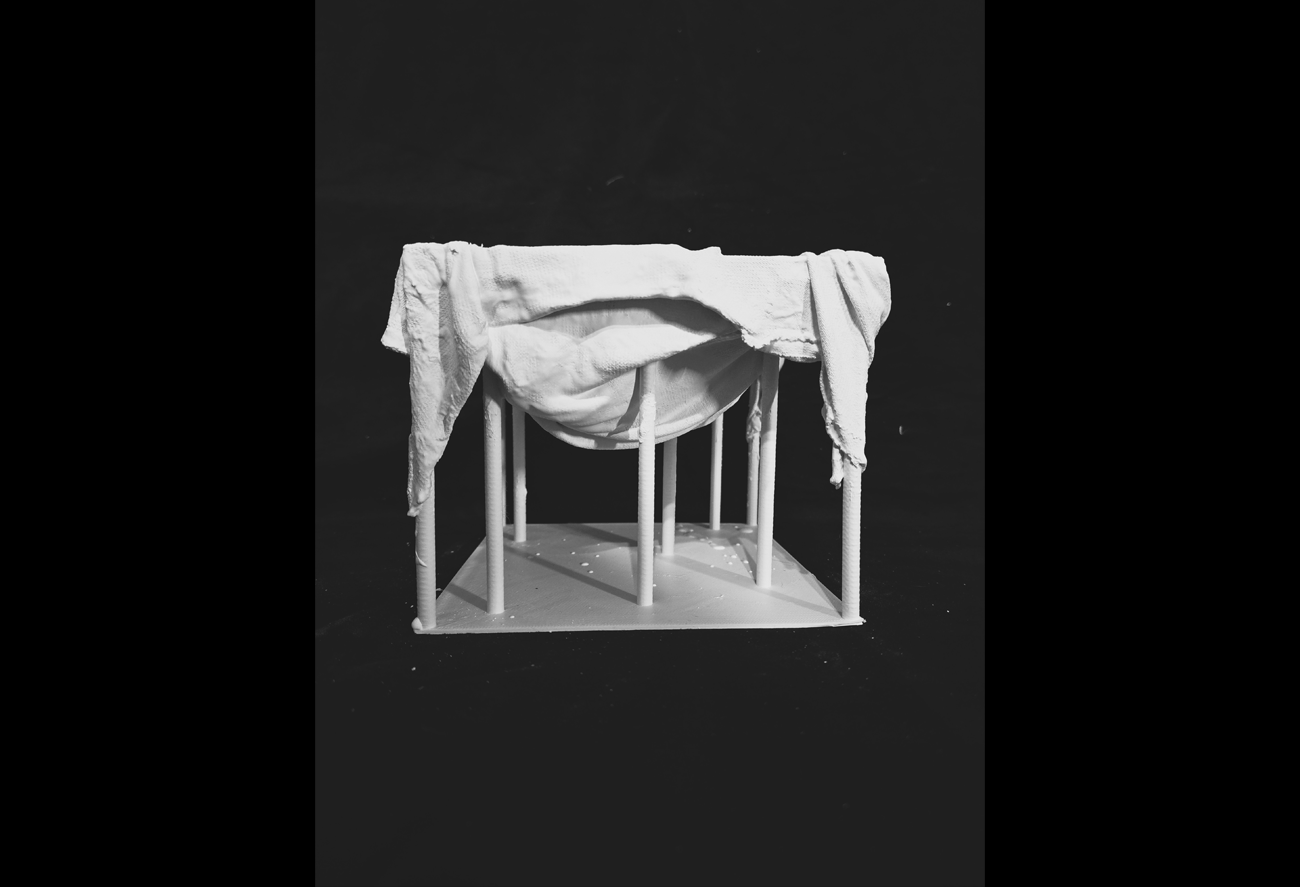
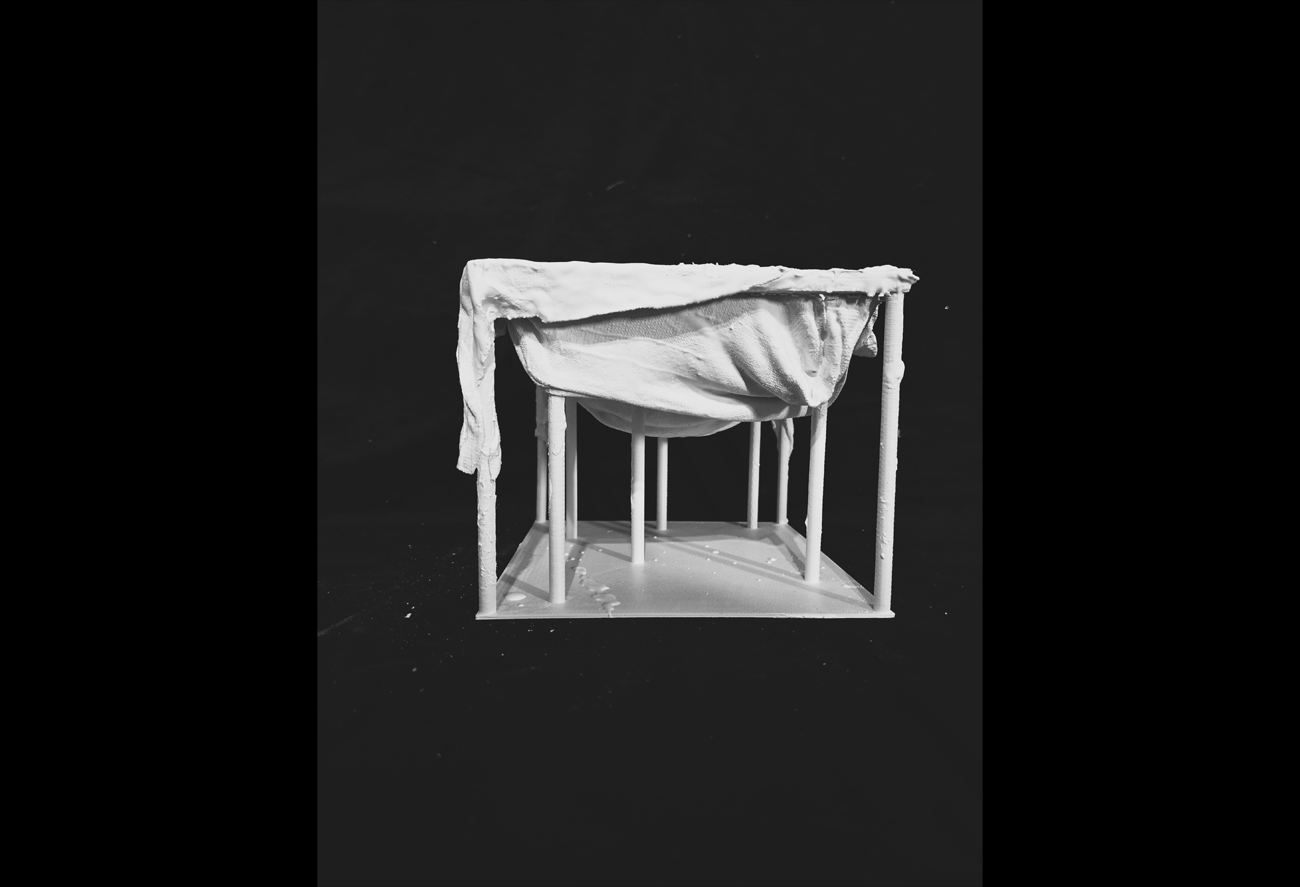
This project began as a study of stereotomy through the method of subtraction in stone, drawing from the rigidity and precision of Gothic form. As the work evolved, material constraints prompted a shift away from stone toward lighter, more adaptable media that could retain its formal logic without its physical weight. The project developed through drafted patterning, which was then translated into loose fabric formwork, allowing geometry to soften and drift while preserving its original intent. Column forms retain rigid bases that reference their Gothic origins before loosening as they rise, while the roof follows between them as a two part surface, sinking with gravity through plaster soaked nylon and muslin to create a soft interior and a thin outer shell that recalls historic vaulting. Using plaster to represent concrete without its weight, the project reframes Gothic rigor into a contemporary architectural language that is fluid, restrained, and attentive to place within the flat landscape of Central Park.

A powerful architecture & Construction theme.
Construct your website in the perfect Ratio.
Alienum phaedrum torquatos nec eu, vis detraxit periculis ex, nihil expetendis in mei. Mei an pericula